Waiting room safe code
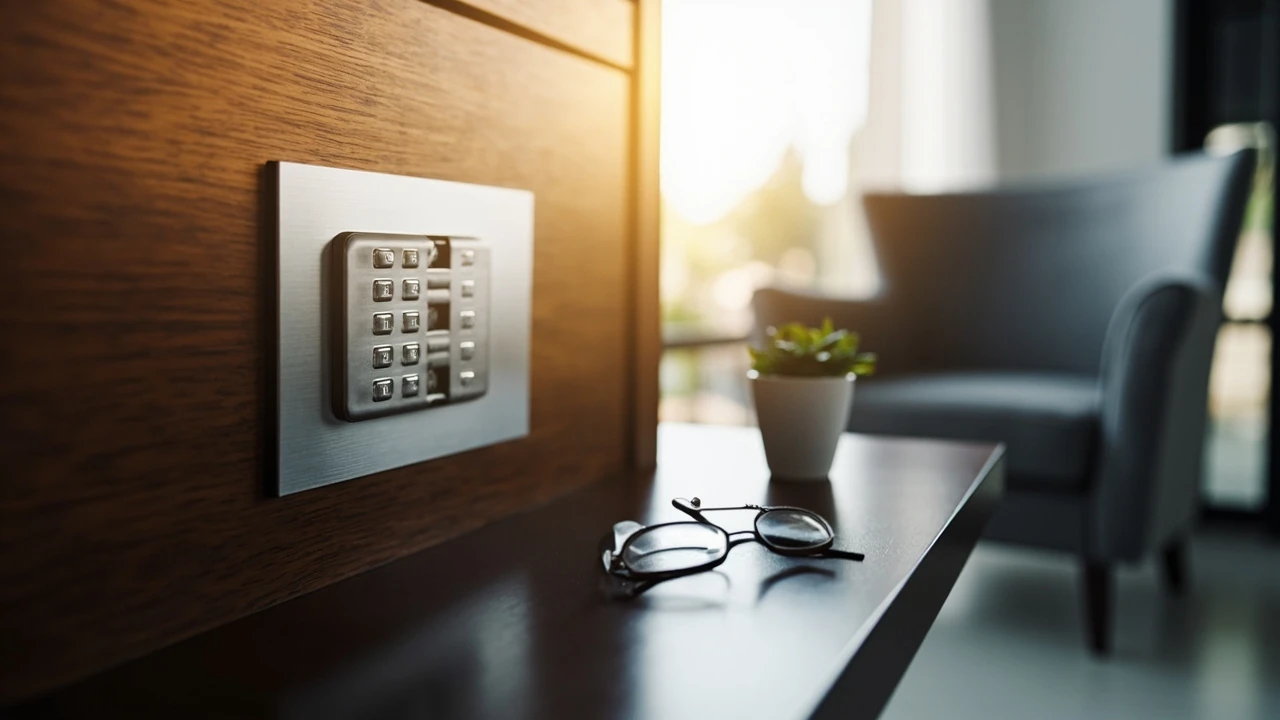
A safe in a waiting room is one of the oldest environmental puzzles in video games, and it is still one of the easiest to get wrong. The player walks into a lobby, an office, a clinic, or a bus station, sees a heavy dial combination lock on a metal door, and immediately starts looking for a clue. The waiting room safe code is the small piece of design glue that decides whether the moment feels clever, punishing, or completely invisible. For developers, the question is not just what the digits are. It is how the player is led to notice the code, how the combination is taught, how failure is handled, and how the reward fits the rest of the level.
This article looks at the waiting room safe code as a design pattern rather than a single solution. It covers how puzzles are usually constructed around that lock, how to control the gap between observation and solution, how feedback shapes trust, and how playtesting can separate a satisfying challenge from a stuck-room bug report. The notes apply whether you are building a 2D point-and-click adventure, a first-person exploration game, a horror title, or a narrative walking simulator with a single short detour.
Why the waiting room safe code is a useful design pattern
A safe in a waiting room combines three things players intuitively expect from a public indoor space: paperwork, signage, and quiet boredom. That makes it a natural place to stash a clue, a key, ammo, or a small story reveal without breaking the room’s logic. The waiting room safe code works as a pattern because it lets designers put a reward in plain sight, then hide the means to reach it inside ordinary furniture, posters, magazines, and clipboards. When the room reads correctly, the player feels like a detective. When it does not, the same pattern turns into a search-every-pixel chore.
From a production standpoint, the pattern is also cheap. A safe prop, a four-digit combination, a few props with numbers on them, and a short interaction script are enough to fill an otherwise empty corner of a level. Because the pattern is so well established, players also bring their own assumptions: they expect magazines to have circled dates, posters to hide numbers, and clocks to be set to a meaningful time. Those assumptions are useful. They reduce the amount of tutorial the room has to provide, but they also create traps when designers rely on them too heavily.
Defining the player question the room has to answer
Before any art or code is written, a waiting room safe code room has to answer a single question: what is the player actually doing here. The most common answers are:
- Find a small reward that supports a larger objective, such as a keycard, ammo cache, lore document, or crafting component.
- Learn a new mechanic, such as combining a torn page, a calendar, and a clock face to read a four-digit code.
- Reinforce the setting, by giving the player a reason to look at posters, brochures, and patient information leaflets that build the world.
- Provide a soft pacing break, a small enclosed space with a single focused problem between larger combat or story beats.
Each of these goals changes the design of the waiting room safe code. A reward-focused safe can hide its combination in another room entirely. A learning-focused safe should put both the clue and the lock close together so the lesson lands quickly. A setting-focused safe uses the code to push the player into reading, not just scanning. A pacing-focused safe needs to be short, obvious enough to solve in a few minutes, and forgiving when the player misreads a clue. Mixing more than two of these goals in one room is a common source of design drift.
Information architecture behind a waiting room safe code
The pattern breaks down into a small set of moving parts. Thinking of them as separate layers makes it easier to plan and to debug later when playtesters get stuck.
| Layer | What it does | Typical in-room examples | Risk if handled poorly |
|---|---|---|---|
| Anchor object | The safe itself, placed where the player will notice it within the first ten seconds of entering. | Wall-mounted safe, floor safe under a desk, safe disguised as a power panel. | Player walks past it and only finds it through accidental backtracking. |
| Source of digits | The pieces of information that combine into the four-digit (or three- or five-digit) code. | Magazine cover, framed certificate, calendar, clock, patient’s wristband, paperwork, photos. | Source is too obscure, reads as decoration, or duplicates another clue in the same room. |
| Combination rule | The cognitive step that turns the sources into a number: order, arithmetic, date format, clock positions, or simple reading. | Use the year on the certificate, then the page number, then the minute hand position. | Rule is never demonstrated anywhere, so the player has to guess the game’s internal logic. |
| Feedback channel | How the game tells the player that a digit is right, wrong, or partially correct. | Lock clicks, the dial stiffens, an error buzz, a small text log, or silent failure with no confirmation. | Silent failure makes the player unsure whether their code is wrong or the game is broken. |
| Reward payload | What opens, and why the player should care. | Keycard, ammo, lore note, side objective item, cosmetic. | Reward does not connect to anything else in the level, so the safe feels decorative. |
When playtesters fail to solve a waiting room safe code, it is almost always one of these five layers. They may have seen the safe, but not noticed the source, or they noticed the source, but did not know how to combine the digits, or they tried the right digits and the feedback told them nothing.
Pacing the moment around the safe
Waiting rooms are usually placed between louder beats. That is intentional, because the puzzle is supposed to be a cool-down. A common mistake is to time the safe for the same emotional intensity as the surrounding level, which turns a quiet puzzle into pressure.
A simple pacing template for a waiting room safe code scene is:
- Entry: the player arrives from a louder or more scripted space, such as a corridor, a fight, or a cutscene.
- Settle: ambient audio changes, the camera or controller reminder is allowed to drift, and the player is given five to ten seconds of low-pressure observation.
- Discovery: the safe is seen, and the first readable clue is in the same screen.
- Search: the player crosses the room to collect the remaining digits.
- Resolution: the player returns to the safe, enters the code, and receives the reward with a clear confirmation.
- Exit cue: the room points toward the next area, often through a door that only opens after the safe is opened, or through a strong visual line of sight.
Step three is the one most often rushed. If the player walks into the room and does not see the safe within the first few seconds, the rest of the pacing collapses, because the player has to actively hunt for the reason to look at the room. Designers often solve this with a small visual trick: a glint, a light angle, a slight glow on the dial, or a difference in material that catches the eye. None of these are cheating. They are the equivalent of a stage light on a prop.
Hiding the code: readable, not invisible
The single biggest design failure with a waiting room safe code is hiding the code so well that the player cannot read it as a clue. Magazines with circled dates, posters with small printed numbers, and clocks set to a specific time are all common because they are legible. They look like they could matter. A pure environmental puzzle that requires the player to count ceiling tiles or notice a hairline scratch usually reads as a bug, not a feature.
To keep the code readable, designers can run a short checklist on every source object:
- Is the number printed, stamped, or attached, rather than painted on the texture without a clear carrier?
- Is the object something the player can interact with, pick up, or zoom in on?
- Does the object look out of place enough to stand out, but not so out of place that the player assumes it is junk?
- If the object is generic, such as a clock or a calendar, does the game also provide a second, more specific clue in the same room?
That last point matters. Generic objects like clocks and calendars appear in almost every waiting room in every game. If the only clue is the position of the hands, the player has no way to know that this particular clock is the right one. A small fix is to make the clock broken, tilted, or the only one in the room. A larger fix is to add a second clue that points to the clock, such as a torn page that says, “Check the waiting room clock.”
Combination rules that survive playtesting
Most waiting room safe code puzzles reduce to one of a small number of combination rules. Choosing the right rule is mostly about how much cognitive load you want the room to carry.
| Rule style | How the player gets the code | Best when | Avoid when |
|---|---|---|---|
| Direct read | The code is printed, written, or circled somewhere obvious. | The room is a tutorial or a low-stakes reward. | The level is long and the room is supposed to feel like a discovery. |
| Order of objects | The code is taken in the order the player finds specific items, such as patient room numbers or magazine issue numbers. | The room has a natural reading order, like a queue or a row of chairs. | The objects are scattered and the order is not intuitive. |
| Arithmetic | Two or three numbers are combined through a small calculation, such as the year minus the date. | The player has already met a system that uses this kind of math. | The math rule is invented in this room alone and has no precedent. |
| Time reading | The code is read from a clock, a bus schedule, or an appointment card. | The setting already includes time, such as a clinic or a train station. | The clock is one of many, or the time is also used for a different puzzle. |
| Cross-reference | One source gives a row, another gives a column, and the code sits in a chart, roster, or seating plan. | The room has visible paperwork and the player is expected to read it. | The chart is small, the player’s camera is far, or there is no zoom or close-up. |
| Pattern or word | A short word, name, or symbol maps to numbers through a key that the player has seen before. | The game already has a consistent cipher or keypad language. | The cipher is new and the player has no reference. |
A useful test is to remove one digit from the code and ask a teammate to solve the room without you. If they cannot, the rule is too dependent on designer intent. If they solve it in under two minutes without hints, the rule may be too obvious. Most well-tuned waiting room safe code puzzles sit somewhere between those two extremes.
Feedback: the part players actually feel
Feedback is what turns a combination lock from a prop into a puzzle. Without feedback, a wrong code feels like a system failure. With too much feedback, a brute force attempt feels like the intended path. The waiting room safe code pattern benefits from layered feedback that tells the player three different things: their input was received, their combination is wrong, and they have tried too many times.
A common pattern in modern games is the click-and-deny lock. The dial turns, the player hears a soft click for each correct digit in the right position, and a heavier click when the full code is wrong. This style is forgiving, because it lets the player know whether they have at least one digit right. It also encourages experimentation, which is useful in low-stakes rooms. The risk is that the player can grind through permutations if the click is too informative. A middle ground is to confirm only on the final digit, so the player gets a clear success or failure state without being able to brute force the code digit by digit.
Some games prefer silent locks. A wrong code simply does nothing, and the player has to compare the safe against their own notes. This style fits horror or simulation-heavy games, where every mechanical confirmation breaks immersion. The trade-off is that playtesters will report the safe as broken unless the room is generous with alternative reading aids, such as a journal, a text log, or an in-game phone.
For reward-focused safes, a soft lockout is worth considering. After three or five wrong attempts, the game can pause, the safe can rattle, and a short line of dialogue or a journal entry can hint that the player is on the wrong track. Hard lockouts, which simply refuse further attempts, are usually too punishing for a single-room puzzle.
Trust, fairness, and the “I must have missed something” moment
When a player is stuck on a waiting room safe code, the most common emotional response is not frustration but self-doubt. They are convinced they missed a clue, walked past a room, or read a number wrong. That feeling is useful up to a point. It tells the player that the puzzle is honest, that the answer exists, and that they can solve it if they keep looking. When the feeling crosses into genuine confusion, the same honesty becomes a design failure.
To stay on the right side of that line, the room needs an internal logic that the player can describe. If a playtester is asked, “what do you think the code is, and why,” their answer should be in the same ballpark as the actual solution. If their answer is a wild guess based on a number they saw three rooms ago, the puzzle is not reading.
One technique is to introduce a “second wind” clue. If the player has spent more than a set time in the room, or has interacted with the safe several times without success, the game can add a small visual or audio cue that points at the right source. A poster can gain a slight glow, a clock can tick louder, or a nearby NPC can repeat a line that happens to include a digit. The trick is to make the hint feel like a property of the world, not a pop-up tutorial.
Narrative roles for a waiting room safe code
Because a waiting room is a transitional space, the safe inside it can carry more narrative weight than its size suggests. A few common roles in published design notes and postmortems include:
- The bribe safe. The player opens a safe in a clinic waiting room to find an envelope of cash or a labeled drug, confirming the location is part of a side economy.
- The patient file safe. The code unlocks a private medical file that explains a character’s condition, often the same condition hinted at by posters and pamphlets in the same room.
- The maintenance safe. The safe holds tools or keys that the player needs to leave the room, turning a quiet puzzle into a soft gate.
- The witness safe. A small personal object, such as a watch or a photograph, is stored in the safe as a memory, which makes the room a quiet character moment rather than a loot stop.
Each of these roles changes how the player reads the room. A bribe safe pushes the player toward scanning for money and contraband. A patient file safe pushes the player toward reading. A maintenance safe pushes the player toward urgency. A witness safe pushes the player toward atmosphere. Designers often combine two of these, but combining three or more usually flattens the room into a generic “find the number” task.
Building the room: a small production checklist
For a small team, a waiting room safe code scene fits into a single sprint if the level design, art, and scripting are split cleanly. The following checklist is a starting point, not a fixed rule.
- Block out the room with greybox geometry, including a clear path from the entry door to the safe and a clear view of the safe from the entry point.
- Place the source objects so that at least one is visible from the safe and at least one requires the player to move.
- Write the combination rule on paper, then strip one source and see whether the room still reads.
- Prototype the safe interaction with placeholder art and at least three different wrong codes, so the feedback can be tested before final animations land.
- Add the reward and the door or pickup that consumes the reward, so the level can be played from start to finish.
- Run the room with at least one external playtester who has not seen the level before, and capture both their solution time and the order in which they looked at objects.
Step six is the one most often skipped. Internal playtests usually involve people who already know the code, and they tend to solve the room much faster than new players. External playtests produce the only data that really matters: how long a stranger takes, which source they read first, and where they give up.
Common failure modes and how to spot them
Even experienced teams ship waiting room safe code puzzles that underperform. A few of the recurring failure modes, and the diagnostic signal for each, are worth keeping in mind.
| What it looks like in playtests | What usually causes it | Quick fix to try | |
|---|---|---|---|
| Invisible safe | Players report the room as empty or as “a waiting area with nothing to do.” | The safe is too small, too dark, too far from the entry, or visually similar to surrounding props. | Add a small light, change the material, or move the safe onto a wall the player faces first. |
| Readable code, wrong rule | Players find the right numbers but try them in the wrong order or as the wrong type, such as a date instead of a clock time. | The rule is not demonstrated in the room, or a second puzzle in the game uses the same numbers differently. | Add a small in-room example of the rule, or rename the digits so the order is more obvious. |
| Two competing sources | Players get stuck between two reasonable numbers, usually because two props each have a believable digit. | The room has more digits than the code needs, and the extra digits were left in by accident. | Remove or repaint the extra digit, or add a small note that disqualifies it. |
| Silent failure | Players assume the safe is broken after two or three wrong attempts. | The lock gives no audio or visual feedback on wrong input. | Add a short denial animation or sound, even if it is subtle. |
| Reward does not connect | Players open the safe, take the item, and leave without understanding what it changed. | The reward is referenced only in a later room, or the safe does not trigger any follow-up event. | Trigger a door, a light, or a short line of dialogue when the safe opens, even if the reward is a generic pickup. |
If two failure modes appear in the same playtest, the room is usually trying to do too much. Removing one of the source objects or simplifying the rule is almost always faster than adding more hints.
Accessibility considerations for a waiting room safe code
Puzzle rooms are a common accessibility gap. A waiting room safe code can be impossible for players with low vision, color blindness, cognitive load issues, or limited fine motor control, depending on how it is built. None of these players should be locked out of progression if the safe is a required objective. Some practical choices to consider:
- Allow the dial or keypad to be operated with both keyboard and controller, with adjustable sensitivity and no time pressure on input.
- Provide a high-contrast or enlarged UI for the digits, with optional captions for any audio clues.
- Offer an in-game note or journal that automatically records each digit the player has found, so the player does not have to memorize the code.
- For required safes, add a difficulty option that increases the feedback or reduces the rule complexity without changing the rest of the level.
- For optional safes, leave the room as is, but make sure the surrounding level still works if the player walks past the safe entirely.
Accessibility is not a separate design pass. It is a set of choices that sit alongside the core puzzle, and most of them are free once the team decides to make them. A room that is fair for a tired player at midnight is usually a better room for everyone.
Working with save states and respawns
Waiting room safe code puzzles interact with save systems in a way that is easy to overlook. If the player saves the game after entering one digit, then reloads, they should not have to re-enter the same digit. If the safe is a one-time interaction, the game should not allow the player to open it twice and get two copies of the reward. These are small details, but they show up in bug reports quickly.
A short list of save-state rules for a waiting room safe code is worth pinning to the design document:
- Persist the dial or keypad input across saves, including partial entries that the player has confirmed.
- Persist the safe’s open or closed state, so the room does not reset on reload.
- Persist any visual changes that came from opening the safe, such as an open door or a removed prop.
- Do not persist the safe’s locked state for cinematics that were already played, to avoid replaying the unlock animation.
- If the room is randomly generated or part of a roguelike loop, decide whether the code is fixed per run or fixed per seed.
These rules are not specific to safe puzzles. They are the same rules that apply to any persistent prop, but safes are a frequent offender because the lock is interactive and the prop is small.
Testing the room with metrics, not just vibes
Qualitative feedback is the main tool for puzzle design, but a small amount of metric data can catch problems that playtesters do not report. For a waiting room safe code, the useful metrics are:
| Metric | What it tells you | Healthy range for a single-room puzzle | Warning sign |
|---|---|---|---|
| Time to first interaction with the safe | How quickly the safe is noticed after entering the room. | Around 10 to 30 seconds for a typical player. | Over a minute, or near zero because the player walked straight to the safe without looking around. |
| Time to solve | How long the player takes from first interaction to opening the safe. | Two to six minutes for a normal difficulty, longer for optional safes with deeper puzzles. | Over ten minutes, or under thirty seconds, both of which suggest a tuning problem. |
| Wrong attempts before success | How many times the player entered a wrong combination. | Zero to three on average. | Five or more, which usually means the feedback is unclear or the rule is hidden. |
| Drop-off rate | The percentage of players who leave the room without opening the safe. | Low for required safes, modest for optional safes. | A high drop-off rate on a required safe means the puzzle is blocking progression. |
| Source order | The sequence in which the player examined each clue object. | A natural reading order, such as left to right, or near to far. | A scattered order with long pauses between sources, which suggests the player is guessing. |
None of these metrics are pass or fail on their own. They are useful when the same room produces the same pattern across multiple players. A single outlier who solves the safe in ten seconds is not a tuning problem. Ten outliers in a row is.
Writing a waiting room safe code for a short, narrative game
In a short game, the waiting room safe code often has to do more with less. There is no room for a second wind hint, a long combination rule, or a complex reward chain. The puzzle has to land in a single play, and the room has to read in a single pass. A useful approach is to compress the pattern into three signals:
- One anchor: a single prop that clearly matters, such as a stamped form, a wristband, or a unique object on a side table.
- One rule: a single step that turns the anchor into digits, such as “read the last four digits of the case number” or “set the dial to the time on the wall clock.”
- One payoff: a single reward that the player can see or hear change, such as a door that opens, a light that turns on, or a line of dialogue that plays.
That minimal structure is also a good starting point for a prototype, even in a larger game. If a team can make a waiting room safe code read with three signals, they can be more confident when they add a fourth or a fifth. Adding more is easy. Removing excess is what usually takes the longest.
Working with level narrative and diegetic UI
Diegetic UI, meaning interface elements that exist inside the world, fits naturally with a waiting room safe code. The dial is the UI, the source objects are the prompts, and the room itself is the menu. To keep that reading clean, the rest of the room should avoid competing diegetic elements, such as a holographic map or a floating quest marker that points at the safe. A few principles help:
- If the game uses a quest marker system, do not also mark the safe with a glow. Pick one and let the other stay quiet.
- If the safe is part of a quest, write the quest text as a description of the room, not a number. “Find the missing file in the waiting room” reads better than “Find the code 1492.”
- Use the same paper, fonts, and colors across the waiting room so the player does not have to learn a new visual language in a small space.
- Keep the camera close enough that the player can read small numbers without leaning into the screen, or add a zoom interaction on the most important source.
A waiting room is a small stage. A few well-placed props usually read better than a busy one. The fewer non-diegetic overlays the room has, the more the safe feels like part of the world.
How the room changes across genres
The same waiting room safe code pattern lands differently depending on genre, because the player’s expectations shift. A short comparison helps to set the tone before a project commits to a design.
| Genre | Player expectation | Tone of the safe | Reward style |
|---|---|---|---|
| First-person horror | The safe is a hiding spot, a stash, or a small scare. | Quiet, with low feedback and slow animations. | Ammunition, a key, a note that explains a missing person. |
| Point-and-click adventure | The safe is a required obstacle with a clever trick. | Cartoonish or puzzle-box feedback, often with a small visual gag when the wrong code is entered. | An inventory item that unlocks the next area. |
| Open-world action | The safe is a side activity that rewards thorough exploration. | Mechanical, fast, with a clear success animation. | Crafting components, currency, or a small lore entry. |
| Narrative walking simulator | The safe is a moment of reflection or a small story beat. | Atmospheric, with sound and lighting doing most of the work. | A photograph, a journal page, or a recorded voice that the player can dwell on. |
| Co-op or multiplayer | The safe is a coordination moment, or a small race against other players. | Exaggerated feedback, so a remote teammate can tell what is happening. | Shared loot, or a temporary buff that helps the group. |
None of these are right or wrong in isolation. The genre simply changes which failure mode is most likely. In horror, silent failure is the bigger risk. In action games, reward connection is the bigger risk. In walking simulators, the bigger risk is over-instructing the room and breaking the mood.
A short worked example: the clinic waiting room
To pull the design notes together, here is a compact worked example of a waiting room safe code in a fictional clinic. The room is a soft gate between a lobby and a back office. The player is looking for a keycard that opens the staff-only door.
- Anchor: a small wall safe in the corner, lit by a single overhead light so the player sees it from the entry door.
- Sources: a clipboard on the reception desk with a case number ending in 4-9-2-1, a children’s drawing on the wall with the year 1992 circled, a wall clock stuck at 4:21 because of a power cut, and a wristband on a chair with the digits 4-9-2-1 printed on the back.
- Combination rule: the code is the order of the digits as they appear on the wristband, which matches the order on the clipboard. The clock and the drawing are decoys that confirm the player is in the right room without giving the code directly.
- Feedback: the dial clicks on each correct digit. A wrong full combination produces a short buzz, and after three wrong attempts the lights in the room flicker for a moment, hinting that the player should recheck the wristband.
- Reward: a keycard that opens the staff door and triggers a short line of dialogue from the front desk nurse.
This example is deliberately generous. There are four sources for one four-digit code, only one of which is the carrier of the order. That is a fair amount of reading for a single room, and the design only works because the room is a soft gate, not a hard one. The player can leave through the lobby and come back later. If the safe were a hard gate, the same example would need a stronger visual pointer to the wristband, such as a small note that says, “Check the patient wristband.”
QA scripts for a waiting room safe code scene
A QA pass for a waiting room safe code should cover both the puzzle and the supporting systems. The following short script is enough to catch most issues before the room goes to broader playtest.
- Enter the room, look around without interacting, and confirm the safe is visible within the first ten seconds.
- Pick up only one of the source objects and try the resulting number. Confirm the game gives a denial, not a lockout.
- Find all source objects, combine them, and solve the safe. Confirm the reward appears, the safe state persists, and the door or follow-up event triggers.
- Save the game after entering two correct digits, reload, and confirm the digits are still there.
- Close and reopen the game, return to the room, and confirm the safe is still open and the reward is gone.
- Play through the room with the audio sliders set to zero, and confirm the visual feedback alone is enough to read the puzzle.
- Play through the room on the lowest difficulty, and confirm that any accessibility options do not skip the puzzle entirely if it is required for progression.
Running through this list takes about ten minutes per tester and surfaces most of the bugs that players would otherwise find in the first hour of the released game.
Frequently asked questions
What is a waiting room safe code in game design terms?
A waiting room safe code is a combination lock puzzle placed in a transitional indoor space, usually built around a four-digit or similar short code. As a design pattern, it bundles the anchor object, the source of the digits, the combination rule, the feedback, and the reward into a single self-contained scene that gives the player a short, focused task between larger moments.
How long should a waiting room safe code puzzle take to solve?
For a typical required safe in a mid-length level, two to six minutes is a healthy range from first interaction to success. Optional safes with deeper puzzles can run longer, but anything over about ten minutes for a first-time player is usually a sign that the rule or the feedback needs another pass. Tracking the average across a small playtest is a better guide than aiming for a fixed number.
Should a waiting room safe code be required for progression?
That depends on the genre and the level. In linear games, a required safe works as a soft gate if it sits in a clearly bounded room and the player has a clear exit. In open-world games, optional safes tend to read better because the player can choose to engage. If the safe is required, the room should give the player more than one way to make progress, such as another exit, another NPC, or another puzzle that leads to the same door.
How do I stop players from brute-forcing a four-digit code?
Limit the feedback so the player only learns whether the full combination is right, not which digit is wrong. A short delay after a wrong attempt also slows brute force without making the puzzle feel unresponsive. If the code is only four digits, the lockout after a small number of wrong attempts is reasonable, especially if the game hints that the player should rethink the room rather than keep trying numbers.
What if players ignore the waiting room entirely?
That usually means the room does not have a visible reason to enter. A short visual pointer, such as a sign on the corridor that mentions the waiting room, or a sound coming from the room, is often enough. If the safe is required, the game’s main path should physically pass through the room, not around it. Optional safes can stay tucked away, but the surrounding area should still feel like a place worth exploring, with posters, NPCs, or ambient detail that reward the player’s curiosity.
How many sources should a waiting room safe code have?
For a four-digit code, three to five source objects is a workable range. One source per digit is the cleanest, but it can feel mechanical. Two or three sources that combine into the code, plus one or two decoy objects that confirm the player is in the right room, give the room more texture without overloading it. More than five sources tends to dilute the rule, because the player has to track which numbers matter.
Can the same safe pattern work in a procedurally generated level?
Yes, but the combination rule should be fixed per run or per seed, not per room, so the player can learn the language of the game. Per-run randomization works well for the source objects and the digits, while the rule stays consistent, so a player who learns the system on one safe can apply it to the next. Per-room randomization of the rule is usually too punishing, because the player never gets a chance to build intuition.
How do I make the safe feel meaningful without giving away the reward?
Use the room itself to signal weight. A small camera move when the player approaches, a change in the ambient audio, or a brief change in lighting are all ways to mark the moment. The room can also include small visual cues that something is stored here, such as a faded label, a sticker, or a handprint on the safe. The reward stays hidden until the safe opens, but the room tells the player that the room is not just decoration.
What is the biggest mistake teams make with a waiting room safe code?
The most common mistake is hiding the code so well that the player cannot read it as a clue. Teams often assume the player will notice the same number they noticed during development, but players do not have the designer’s context. Running the room with a small group of fresh testers, and watching which sources they actually examine, is the fastest way to catch a hidden code before the room ships.
Should the safe be silent or noisy when the wrong code is entered?
That depends on the tone of the room. A noisy denial fits a puzzle-heavy or comedic scene, where the player benefits from a clear “no” and the room can afford a bit of theater. A silent denial fits horror or simulation-heavy scenes, where any mechanical sound can break immersion. The key is consistency. If the safe gives no feedback on a wrong code, the rest of the room should compensate with clearer writing, a journal entry, or a stronger visual pointer, so the player does not think the game has failed.