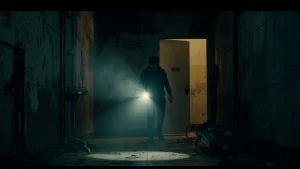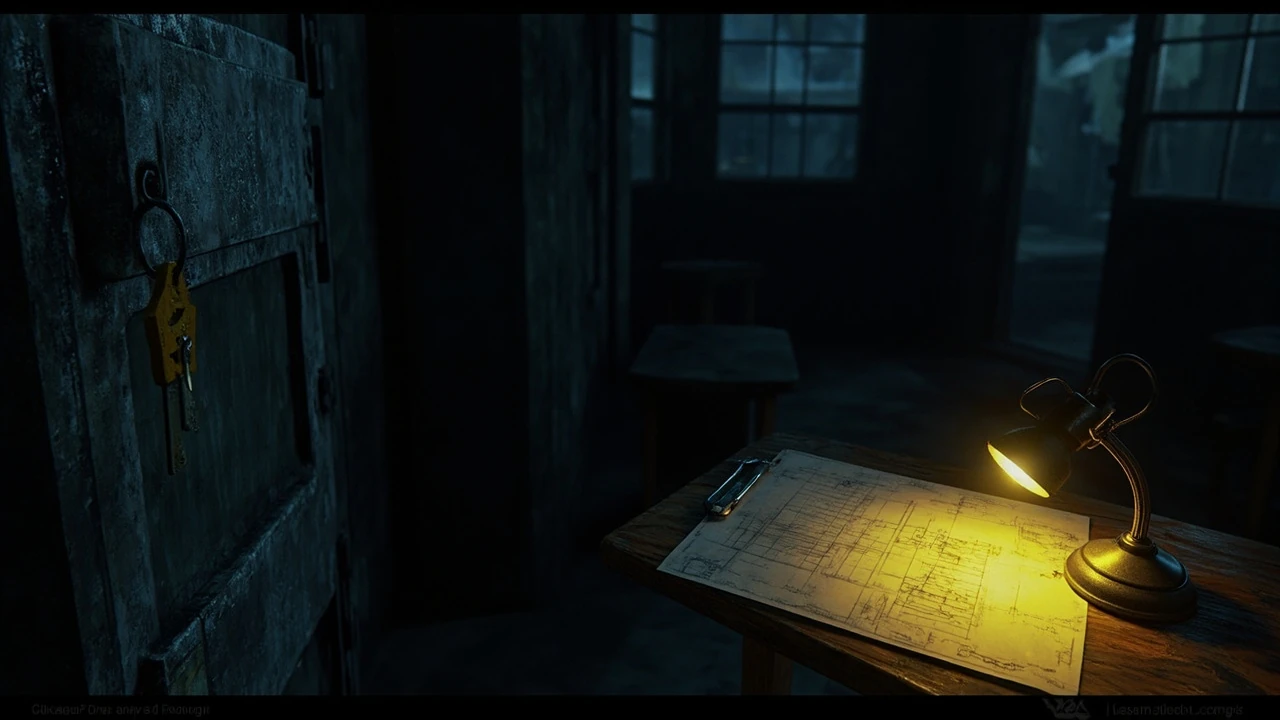
Dam control tower key location: where to look and why designers hide it there
A dam control tower key is the small physical key that unlocks the door or hatch leading into the upper control room of a dam’s tower in a game, and the location is almost always a deliberate design choice rather than a random spawn. Most studios place the item in a secondary structure near the tower, on a maintenance platform, or on the body of a specific named enemy, because the placement has to read as believable to a player scanning the environment. The key itself is rarely the goal of the quest; the goal is the door it opens, and the room beyond usually contains a new route, a cinematic, a save point, or a small piece of the world that the studio wants the player to notice. Understanding that pattern is what makes a dam control tower key location question answerable in under a minute rather than thirty.
This page is written for two readers. If you are a player who is stuck, the early sections give you the short answer, the alternative paths, and the signs that you are on the wrong track. If you are a designer, level artist, or producer, the later sections break down the same pattern as a level design problem, with notes on affordance, gating, encounter design, and the production trade-offs that determine where a key is allowed to live in a vertical slice, a build, or a live environment. The technical framing is the same on both sides because the question is really the same question: what makes this key feel earned without feeling arbitrary?
Quick answer: the three places the key usually is
Across action, survival, and open-world games with dam-set missions, the dam control tower key appears in one of three places more than any other. The first is the maintenance building at the base of the tower, usually a low concrete block with a single door and a roof hatch. The second is the body of an enemy variant who patrols the perimeter, often a sniper, an engineer, or a mini-boss, with the key attached to a belt, a clip, or a clip-style mesh on the model. The third is a drawbridge, a service platform, or a wall safe on the opposite side of the dam wall, so the player has to cross a visible hazard to reach it. If you are stuck, walk the perimeter once, look down at ground level for a small building, and look up for any scaffolding or external staircase the key holder can be standing on.
What this article covers
- How to read the environment so the key location makes sense before you pick it up.
- The standard patrol route for the key-carrying enemy and how to clear it without alerting the rest of the dam.
- Alternate paths for stealth, loud, and pacifist players, with the trade-offs each path creates.
- How level designers justify and block out a key location in a vertical slice.
- Common bugs and design mistakes that make the key feel hidden, unfair, or invisible.
- A short FAQ for the most common stuck points players report on forum threads.
How to read the dam environment before you start searching
Before you start checking every door on the dam, it helps to spend thirty seconds reading the space the same way a level designer would. The dam is a vertical space with three readable layers: the lower deck where vehicles or water meet concrete, the mid-level catwalks and gantries, and the upper tower itself. The key is almost never inside the tower because that would not gate anything. It is on a layer that you can see from the tower but cannot reach from it without the key, which is the design contract for a “look but can’t touch” placement.
Identify the three vertical layers
Look at the tower and count the number of distinct horizontal floors the geometry gives you. In most dams, the lowest level is the turbine hall or service basement, the middle level is the control walkway where the big valves and control desks live, and the top is the smaller room with the actual control panels. The key usually unlocks the door between the middle level and the top, so it is almost always placed below the middle level on a path that forces you to backtrack once you pick it up.
Find the line-of-sight landmarks
Stand where you first see the tower and note the landmarks that draw your eye. A door that is slightly different in color, a window that is broken, a chain-link gate that is closed when the others are open, a small roof, a satellite dish, or a red beacon are all common affordance cues. The key location is usually adjacent to one of those cues, because the designer is telling you “look here, come back later.”
Read the enemy density and lighting
Enemy density is a map. If the dam has a high enemy count near the tower, the key is probably in a quieter area nearby; if the area is empty, the key is probably on a trap, a switch, or a small puzzle rather than a body. Lighting tells a similar story. Bright key lights over a desk usually point to a readable document or code, not a key. A single dim bulb in a side office usually points to a key on a wall hook or in a drawer.
The most common dam control tower key location patterns
Most games with a dam tower will place the key in one of the patterns below, and the pattern itself is usually readable from the skybox, the lighting, and the enemy pathing. These are the patterns that recur across shooters, survival games, and adventure games, and the patterns are worth learning because they survive across sequels and re-releases.
Pattern 1: the maintenance building at the base
The key is inside a small concrete outbuilding at the base of the tower. The building has its own door, a small window, sometimes a roof access, and is usually one of the only structures on the lower level that is not a generator or a valve. Look for a single hanging light inside, a metal shelf, a desk, or a hook on the wall. The key is often on the desk, on the hook, or inside a wall-mounted lockbox that the player can pry open with a melee hit or a lockpick.
Pattern 2: the patrolling key carrier
The key is on the belt or harness of a specific named enemy who walks a fixed route. The route usually loops between two landmarks that are both visible from the tower entrance, which gives the player a way to plan an intercept. The carrier is normally a different unit type from the rest, with a slightly different uniform or a visible accessory, and the game usually telegraphs the role with a subtitle, a waypoint, or a codex entry that names the unit as an “engineer” or “officer.”
Pattern 3: the opposite bank of the dam
The key is on the far side of the dam, often inside a control box, a service truck, or a wall safe. The player has to cross a visible hazard, such as a flooded lower deck, a series of pipes, or a suspension bridge, to reach it. The placement mirrors the real-world layout of cross-border structures such as the International Control Dam, where utility buildings sit on both banks of a shared waterway and crews have to move between them for routine checks. This is the most expensive pattern in production terms because it requires a second large block-out, but it is also the most common in open-world games where the dam sits in the middle of a larger map.
Pattern 4: a small puzzle or panel
The key is the reward for solving a small environmental puzzle, such as rerouting power through a fuse box, aligning mirrors, or reading a code off a wall chart. The puzzle is usually tied to the same power system that the control room uses, so when the player solves it, the lights in the tower turn on and the locked door becomes interactable. This pattern works well in games with a heavier narrative frame because it gives the player a reason to slow down and read the room.
Step-by-step: a reliable route to the key in most dam missions
Use the route below when you do not yet know which pattern the game is using. It is conservative, it avoids most patrol aggro, and it covers the three most common placements in a single loop. If a step is empty in your version of the level, skip it and move to the next one; the loop is designed to be resilient to one or two empty steps.
- Approach the dam from the side that has the most cover, usually downstream where the water level is lower.
- Clear the lower deck silently, focusing on snipers and any enemy with a visible long weapon first.
- Check the maintenance building at the base of the tower for a desk, a hook, or a lockbox.
- Walk the perimeter of the mid-level catwalk and look for an enemy with a non-standard uniform or accessory.
- Cross to the opposite bank if the layout gives you a bridge, a pipe run, or a service door.
- Listen for a humming fuse box or a flickering light, which usually points to a puzzle gate rather than a body.
- Return to the tower entrance, unlock the door, and enter the control room from below rather than from above.
Stealth, loud, and pacifist paths through the key location
Most modern games let the player solve the same key location in more than one way, and the choice usually has a real impact on the next room. The table below compares the three main approaches so you can pick the one that fits your loadout and your tolerance for risk. The “alert level” column describes what the next encounter will look like; even a successful stealth approach can leave the level in a state where a follow-up patrol is harder than it has to be.
| Approach | What you do | Alert level after | Effect on the next room | Trade-off |
|---|---|---|---|---|
| Stealth takedown | Take out the key carrier with a melee or non-lethal weapon and loot the key. | Low if you hide the body; medium if you do not. | Control room is usually empty, easier to read documents and panels. | Requires patience and a quiet weapon; fails if the carrier walks a route you cannot reach. |
| Loud assault | Engage the perimeter, then push into the maintenance building or the puzzle room. | High; reinforcements may spawn on the mid-level. | Control room is usually locked down, with extra turrets or shielded enemies. | Faster but the tower becomes a tougher room; consumes ammo and healing. |
| Pacifist / puzzle solve | Avoid combat, solve the power puzzle, and let the door unlock itself. | Variable; depends on whether the puzzle triggers a script. | Control room may be dark or partially disabled, which can be a hint or a problem. | Slowest route; puzzle may require materials you do not have. |
| Hybrid | Stealth until the puzzle room, then loud if the puzzle is not solvable with the tools on hand. | Medium, with one scripted spawn. | Control room is in the “as designed” state from QA. | Most flexible; requires you to read whether the puzzle is optional or required. |
Alternate routes when the obvious key is gone
Some games have a script that teleports the key, removes it from a body, or rotates the puzzle state when the player dies, fails a stealth section, or fast-travels. If the obvious key is not where the walkthrough says it should be, try the alternates below before assuming the quest is broken. They are listed in the order that usually works in QA test plans.
- Reload the last autosave. Several games respawn the key carrier on a death, even if the rest of the level is preserved.
- Wait one in-game day cycle. A few games tie the key spawn to a patrol schedule that resets at dawn or dusk.
- Check the player’s inventory and any nearby containers. The key can be misfiled as a junk item in the UI in older games.
- Walk away from the dam and re-enter the area. Some streaming systems only commit the key state when the player crosses a zone boundary.
- Re-read the quest log. A “find the key” step is sometimes replaced by a “find a code” step after a scripted event, and the icon does not always update.
What the dam control tower unlocks once you have the key
The key is the gate, not the prize. The control room above the mid-level catwalk is the actual reward, and the room almost always contains three layers of content that the player has not seen before. Knowing what to expect makes the climb feel intentional rather than busywork.
New route to the top of the dam
Most control rooms open onto a small roof or an exterior balcony that gives the player access to the very top of the tower, which is usually the only place on the map with a long-range radio, a sniper view of the next valley, or a fast-travel point. In open-world games this is also where the player first sees the next region on the horizon, which is a deliberate cinematic beat for the level designer.
Documents and codes
The control room has a desk, a wall of switches, and usually one readable document. The document is often the only place where the studio explains why the dam matters to the story, and it almost always points to the next mission. If you are a player who likes the lore, this is the room where the lore pays off, and it is the room the writers were writing toward when the level was being blocked out.
A scripted encounter or set piece
Many dams end with a scripted event, such as a flood gate opening, an alarm sounding, or a helicopter arriving. The key is the trigger that lets the player into the room in time for the script, so missing the key usually also means missing the set piece. Real cross-border dams are coordinated by joint bodies such as the International Niagara Board of Control, which is why the writing room on these levels often borrows the iconography of regulator desks, dispatch logs, and a single camera feed on the wall; if you walk into the control room and nothing happens, check the room for a second interactable, because some games gate the set piece behind a panel rather than the door.
How level designers block out a dam control tower key location
If you are a designer or a producer, the same question looks different. The key is not a single placed prop; it is a small system that has to satisfy the design contract of the level, the technical contract of the engine, and the production contract of the schedule. The block-out below is the order most studios follow when the dam is being built, and the order matters because each step constrains the next one.
Step 1: define the gate and the reward
Before any geometry is placed, the design document has to answer two questions. What does the key unlock, and what is the player actually gaining by unlocking it? If the answer is “a door to a room with a save point,” the key is a piece of pacing furniture and can be hidden cheaply. If the answer is “a story reveal,” the key is a narrative beat and has to be placed in a way that gives the player enough time to read the room afterward.
Step 2: place the three vertical layers
The block-out starts with three greybox boxes that represent the lower deck, the mid-level catwalk, and the upper tower. The boxes are kept simple on purpose; the goal at this stage is to make sure the player can read the silhouette of the dam and identify the entrance to the tower from across the map. Once the silhouette is correct, the rest of the level can be dressed around it.
Step 3: place the key on a sightline
From the player’s first view of the tower, the key has to be on a sightline that is reachable but not yet reachable. The most common choice is a hook on the wall of the maintenance building, because the building is visible from the tower entrance but separated from it by a locked door or a short climb. Designers test this with a “first-frame test”: if you frame the tower on the first cutscene, can the player see the key? If the answer is no, the placement is too hidden and the player will not know to look for it.
Step 4: build the route to the key
Once the key is placed, the route to the key is built backward from the key. The route has to be readable, it has to avoid the most expensive content in the level, and it has to give the player a choice. A typical route is a perimeter patrol, a maintenance building, a small puzzle, and a return path. Each segment is a separate greybox module that can be swapped out without affecting the others, which is what makes the level survivable in a production schedule.
Step 5: tune the encounter around the key
After the route is greyboxed, the encounter is tuned around the key. Enemy count, patrol speed, alert radius, and reinforcement timers are all set so that a stealth player can clear the route in about three minutes and a loud player can clear it in about two. If the timer drifts outside that window, the key feels either trivial or punishing, and the rest of the level has to absorb the difference.
Step 6: dress the key location
Finally, the key location is dressed with props, lighting, and a small set of decals. The dressing is what tells the player that the key is interactable; a key on a plain wall is read as decoration, while a key on a hook with a single light above it is read as a quest item. The dressing pass is also where accessibility cues are added, such as a contrasting outline or a subtle audio cue, for players who need them.
Production trade-offs in key placement
The placement of a single key is one of the smallest decisions in a level, but it touches almost every part of the production pipeline. The table below lists the most common trade-offs and the questions a producer will usually ask when a key is moved late in development. None of these are reasons to avoid moving the key, but they are reasons to expect a small amount of follow-up work whenever the move is approved.
| Trade-off | Question it answers | Cost when changed late |
|---|---|---|
| Visibility vs surprise | Should the player see the key before they reach it? | Re-takes the cinematics, re-records any director commentary that names the key. |
| Stealth vs combat | Is the key on a body, in a box, or behind a puzzle? | Re-balances the encounter, retunes AI alert radii, may rewrite a tutorial pop-up. |
| Narrative vs gameplay | Does the key need to be on a named character for story reasons? | May require a new VO line, a new codex entry, or a new script that triggers the next mission. |
| Performance vs readability | Can the key location afford extra lights, decals, or geometry? | Possible frame-time regression on console, requires a re-profile pass. |
| Accessibility vs realism | Should the key have an audio cue, an outline, or both? | Adds a settings option, a UI string, and a localization pass for every supported language. |
| QA vs production | Is the key placement testable without the full level? | Requires a separate test map or a debug menu entry, which itself needs documentation. |
Common bugs and design mistakes around the dam control tower key
Most of the “the key is missing” reports on player forums are not bugs in the strict sense; they are design or scripting choices that interact badly with the player’s expectations. The list below is drawn from QA write-ups and forum threads and covers the most common reports. The fixes are not guaranteed to be in your version of the game, but they are the same fixes the developer would have considered when the bug was filed.
- The key carrier is killed by an environmental hazard, and the body falls into an unreachable area.
- The key is a physics object and rolls into a wall or a vent, so it is invisible but interactable.
- The quest step updates before the key is actually in the inventory, and the UI hides the icon for a frame.
- The maintenance building is locked from the inside, and the key is on the player’s side of the door.
- The puzzle requires a fuse that the player sold to a vendor, with no warning.
- The control room door is interactable but the key has a different internal name, so the door does not open.
- The patrol path of the key carrier is broken by a streaming boundary, so the carrier never reaches the key drop point.
- The key is on a fast-travel point that the player has already used, and the script expects the player to be on foot.
How modders and level editors recreate a dam control tower key location
For developers and technical artists working in a level editor, a dam control tower key is a useful test case because it exercises so many of the engine’s small systems at once. The pipeline below is the order most modders follow when they are porting a dam to a new engine, a new scale, or a new game mode, and the order is close to the one a studio would use for an official DLC.
- Block out the three vertical layers as greybox volumes before any art is added.
- Place a single prop with a “key” tag on a sightline that is reachable but blocked by a script flag.
- Add a door entity that checks for the key tag and updates the script flag when used.
- Wire the door to a small cinematic or a level transition, even if the transition is a simple load trigger.
- Test the loop in isolation with a debug menu that grants the key, removes the key, and resets the door.
- Dress the key prop and the room behind the door so the player can read both at a glance.
Reading the room: what the level is telling you about the key
The dam is unusually good at communicating the key location because the architecture is repetitive, the lighting is functional, and the affordances are limited. The short list below is what to scan for when you arrive at a dam for the first time and you are not sure where the key is. If you see two of these on the same structure, the key is almost certainly on or near that structure.
- A door that is a different color from the others on the same wall.
- A single hanging light inside a building that would otherwise be dark.
- An enemy with a non-standard uniform, a belt, or a satchel.
- A lockbox, a wall safe, or a small drawer in a place that is otherwise unused.
- A fuse box, a switch panel, or a meter that is off when the rest of the level is on.
- A short piece of climbing geometry, such as a ladder, a pipe, or a scaffold, that ends in a flat platform.
Frequently asked questions
Where is the dam control tower key in the most common version of the mission?
It is on the wall hook inside the maintenance building at the base of the tower, or on the body of the patrolling engineer who walks the mid-level catwalk. The two placements appear in roughly equal numbers across games with a dam-set mission, and the second placement is more common in stealth-focused titles where the engineer is a named NPC.
Do I need to fight the engineer to get the key?
Not always. Many games allow a non-lethal takedown, a pickpocket, or a distraction that drops the key on the ground. The non-lethal route usually leaves the rest of the level in a quieter alert state, which makes the climb into the control room easier and saves ammo.
What happens if I drop the key down a vent or a hole?
In most modern games the key is a quest item and cannot be dropped. In a few older titles the key is a regular physics object, and the level designer usually placed a kill plane below the most common drop points so the key respawns on a reload. If the key falls and does not respawn, reloading the last save is the most reliable fix.
Can I open the control room door without the key?
Sometimes, through a side route such as a roof hatch, a vent, or a broken window. The side route is almost always harder than the key route, because it is the path the level designer added for players who get stuck. If the side route is missing in your version, the key is the intended solution.
Why is the key on a named enemy instead of in a box?
Placing the key on a named enemy turns the search into an encounter, which is a deliberate pacing choice. The encounter gives the level a small moment of tension, a chance to use stealth or combat loadouts, and a natural save point after the key is looted. A box is faster but flatter, and many studios prefer the encounter for that reason.
Is the dam control tower key tied to a side quest or the main story?
Both patterns exist. In some games the key is part of a small side chain that unlocks a vendor or a stash; in others it is the trigger for a main-story cinematic. The quest log usually tells you which one you are on, and the icon next to the key is different in each case. If the icon is gold, the key is part of the main story; if it is gray, it is a side quest.
What should I do if the key location looks empty in my game?
Walk the perimeter once more, check any containers that were empty the first time, and listen for an audio cue that often plays when the player is close to a hidden interactable. If the location is still empty, reload the last save, fast-travel away and back, or wait one in-game day cycle. A small number of games gate the key spawn on a script that resets on a day cycle rather than on a zone load.
Does the control room have a save point?
Most dams place a save point, a fast-travel marker, or both inside the control room, because the room is the natural breakpoint between the search and the next set piece. If the save point is not inside the room, it is usually on the balcony just outside, which is also where the long-range radio and the next waypoint tend to be.
Why does the puzzle gate sometimes break the key spawn?
A few games tie the key spawn to the same script that triggers the puzzle. If the puzzle is solved out of order, the key is removed from the world before the player reaches it. The fix is usually to reload, let the puzzle reset, and solve it from the intended entrance. The same script bug also explains why some players see the key flicker in and out of existence on the ground.
Are there accessibility options for finding the key?
Most modern games include at least one of the following: a high-contrast outline on quest items, an audio ping that plays when the player is close, a quest arrow that updates in real time, or a “ping the next objective” button on the controller. If the game has none of these, the in-game map usually has a marker that you can use as a rough guide, even when the key itself is not visible.
“`html