Why Even Care About a Lost Ark Classes Tier List?
You know what? When players talk about a Lost Ark classes tier list, they’re not just complaining or bragging. They’re giving you – the developer – a real-time, emotionally charged data dump. It’s a gut check on your design choices. Think of it like this: a tier list is the crowd’s roar, telling you which ride at the theme park is the most thrilling and which one is just… meh.
The thing is, in a game with over 20 advanced classes, achieving perfect parity – where every class is a solid S-tier performer – is like trying to catch smoke. It simply won’t happen. What will happen is that player perception, the community’s current understanding of raid mechanics, and even the latest patch notes will shift the meta. This fluctuation isn’t a bug; it’s a feature of a living game. It keeps things fresh, makes people want to log in after a patch, and gets them talking on Reddit and Discord.
What’s the Big Secret to Lost Ark’s Class Design?
Let me explain the core of it-it’s all about Identity. Every single class, from the sturdy Gunlancer to the flashy Sorceress, has a unique identity skill, a mechanical hook that makes the class feel different. This identity isn’t just a fancy special ability; it’s the heart of the class, what defines its rotation and its role in a party:
- The Identity Skill: The Sorceress, for example, builds up a meter to enter Arcane Rupture or Reflux, essentially letting her choose between huge burst damage or more sustained, mobile damage. This simple choice gives you two distinct playstyles from one base class.
- Tripods are Everything: This is where the genius lies, honestly. Tripods, those skill enhancements, let players drastically alter how a skill functions. It’s a genius layer of customisation. You might have one tripod that turns a single-target spell into an AoE cone, completely changing its utility. For a beginner developer, that’s a massive takeaway: give players the tools to build their own tier list within your class structure. It keeps the theory-crafting machine whirring.
We’re developers, right? So, we look past the high numbers and see the structure. Lost Ark’s system isn’t just “DPS, Tank, Healer.” It’s about front-attackers, back-attackers, positional classes, hit-masters, and synergy providers. That level of mechanical segmentation is what makes a huge roster work without everything feeling like a reskinned version of the same thing.
The Power of Role Satisfaction: Learning from Supports
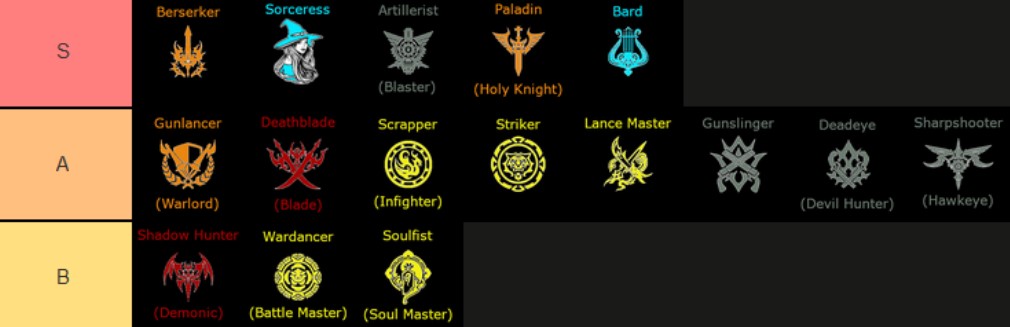
A fascinating thing you notice when you study any Lost Ark classes tier list is the placement of support classes – like the Bard, Paladin, or Artist. They are almost always S-tier, not because they do the most damage, but because they are indispensable.
This is a huge, subtle emotional hint for any dev: players want to feel needed:
- Look at the Bard. They are squishy. They don’t hit hard. But when they drop a massive shield or a damage buff on the raid group? The whole team breathes a sigh of relief. That feeling of being the lynchpin, the one thing the raid cannot survive without, is what makes the class so appealing and top-tier in terms of utility. It’s not about their personal DPS; it’s about their multiplier on the group’s success.
- The Paladin vs. Bard Dichotomy: You’ve got the Paladin, who is more of a sturdy, passive, buff-and-shield support. Then you have the Bard, who requires much more active positioning and identity management for those massive burst heals. Both are top tier, but they offer different flavors of “hero.” This is the kind of meaningful choice you should aim for in your own party game – two solutions to the same problem, each with a different feel.
Support Class Design – A Dev Perspective
| Class | Primary “Feel” | Key Design Lesson for Beginners |
| Bard | High-Skill, Burst Support | High risk (squishy) for high reward (massive burst heals/buffs). Great for engagement. |
| Paladin | Sturdy, Utility Support | Simple, reliable buff rotation with high innate survivability. Excellent entry point for a support role. |
| Artist | Zoner/Utility Support | Unique resource/placement mechanics (paints/portals) that disrupt the flow of combat. Adds a fresh dynamic. |
You see, for the game to feel right, you need that emotional payoff. When you save a wipe with a clutch shield, that’s a powerful emotional cue, far more resonant than just seeing a big damage number.
It’s All About the Floor and the Ceiling: The Skill Gap
Honestly, the difference between a high-tier class and a low-tier one often comes down to the skill floor versus the skill ceiling.
Take the Blue Gunlancer (Combat Readiness), for instance. It’s often considered a great beginner class. Why? The rotation is simple, and they’re ridiculously tanky. Their playstyle is very forgiving. This means their skill floor is high – you can pick it up and be immediately useful.
But there’s a catch. The Deathblade (Surge), on the other hand, is a different beast entirely. It takes a ton of mechanical prowess, perfect back-attacking, and flawless Identity management to hit its peak potential. It has a super low skill floor (a beginner will struggle), but its skill ceiling is sky-high – in the right hands, it’s an absolute monster.
As a developer, you need both! You need the welcoming, forgiving classes (like the Berserker or Sorceress/Reflux) to onboard new players, and you need the high-ceiling classes (like the Deathblade/Surge or Gunslinger) to keep the veterans hungry for mastery.
A good design philosophy: The easier classes might have a slightly lower absolute damage cap, whereas the harder classes, the ones that require perfect execution, should have a higher potential ceiling. It’s a fair trade-off. But there’s a vital design element: even the “easy” classes must feel satisfying to play at a high level. That’s the key to retention.
Beginner Developer’s Toolkit: Lessons from the Lost Ark Class Design
So, you’re just starting out on your own game-maybe it’s an RPG, a MOBA, or a co-op shooter. What can you take from the Lost Ark philosophy?
- Start with the Fantasy, Not the Numbers:
- What feeling are you trying to evoke? A lightning-fast blur of motion? A walking fortress? Lost Ark’s classes are defined by their visual and mechanical fantasy first. The Artillerist? You feel like a walking cannon, slow but devastating. Get the feeling right, and the numbers can follow.
- Make Resource Management a Gimmick (in a good way!):
- Soulfist uses her unique “Hype” meter. Glaivier switches between two weapon stances. These resource mechanics aren’t just mana bars; they are mini-games within the combat loop. They demand active thought, and that’s how you heighten player engagement. It’s a brilliant way to make a simple beat-them-up feel incredibly strategic.
- The Goldilocks Principle of Synergies:
- Every class has a built-in synergy for the group – a crit buff, a debuff on the boss, an attack speed boost. You know, these little contributions that make everyone else hit harder. This is critical. It ensures that even a B-tier DPS class is still wanted in a raid because their synergy is valuable. Lesson: Never make a class feel completely useless because the group is missing its specific utility.
Digression: The Perils of “Perfect” Balance
Honestly, the quest for perfect balance can be a soul-crushing experience. We’ve been there. You tweak one number, and suddenly three other classes feel awful. It’s a never-ending cycle.
The beauty of the current meta – the Lost Ark classes tier list you see today – is that it is imbalanced by design. It forces players to adapt, to try new subclasses, and to experiment with different engravings and gems.
- You could argue that the Gunlancer is a little too tanky sometimes, right? But that imperfection is what makes the class’s identity feel so strong. It’s an unapologetic tank. We have to be okay with some classes excelling in certain areas, even if it feels a little “too strong.” It’s better than having twenty perfectly balanced, perfectly boring classes.
Designing for Longevity: Lost Arc Class Specializations
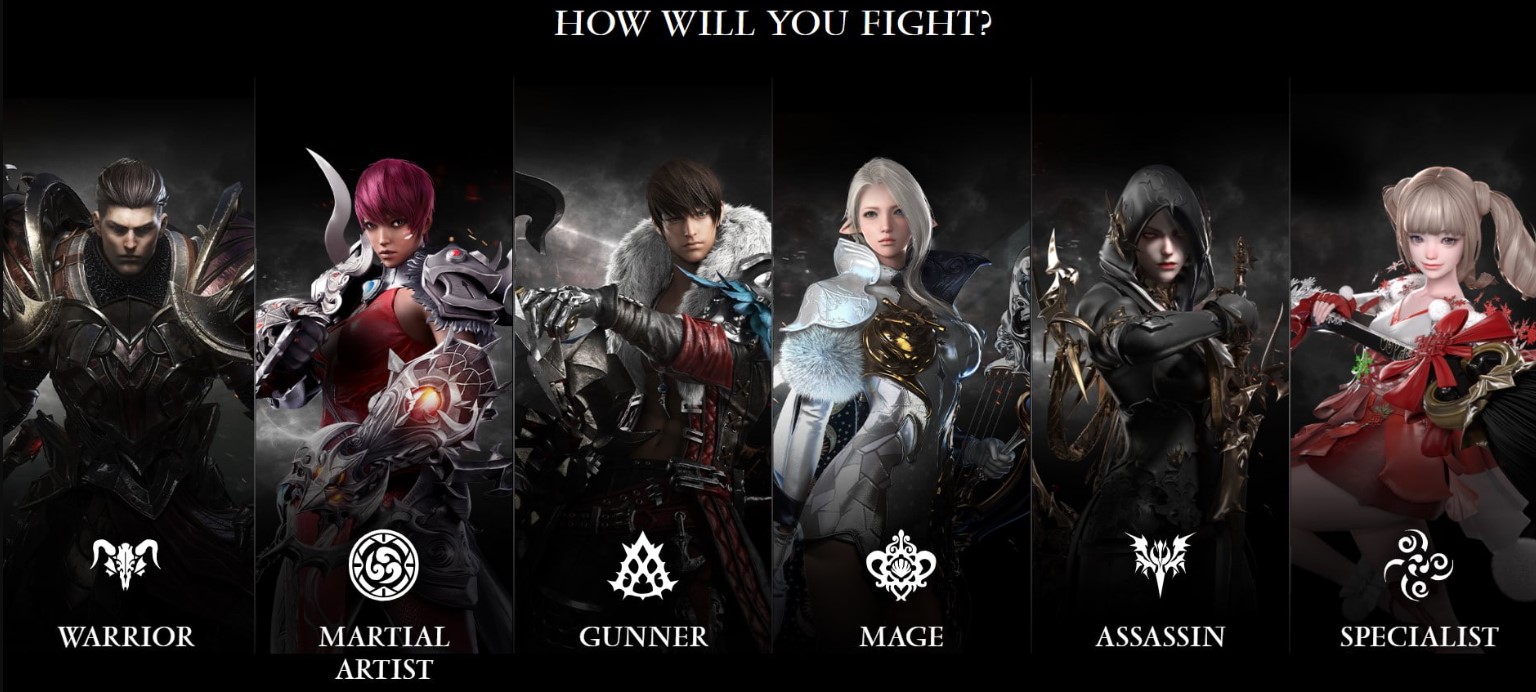
You know, the idea of having a base class (like Mage) that splits into specializations (Sorceress, Bard, Arcanist, Summoner, Artist, etc.) is another masterclass in design efficiency. It lets you quickly roll out new content, new classes, while still maintaining some core mechanical consistency.
The Core Archetypes and Their Specializations
| Archetype | Specializations (Examples) | Defining Mechanic |
| Warrior | Berserker, Gunlancer, Paladin, Destroyer | High durability; focuses on ‘stagger’ (boss interruption) and front-attack. |
| Martial Artist | Striker, Wardancer, Scrapper, Soulfist, Glaivier, Breaker | High mobility; focuses on back-attack and quick, combo-heavy skills. |
| Gunner | Gunslinger, Deadeye, Artillerist, Sharpshooter, Machinist | Weapon-swapping or ranged/AoE specialization. |
| Mage | Sorceress, Bard, Arcanist, Summoner, Artist | Caster roles; high-impact identity skills. |
| Assassin | Deathblade, Shadowhunter, Reaper, Souleater | High burst or continuous transformation. |
This tiered structure is something a beginner dev should think about early. You can add a new subclass to an existing tree faster than creating an entirely new one from scratch, and players will feel instantly familiar with the base skills. It saves game development time and keeps the content pipeline flowing.
So, Who’s Really the Best? The Beginner’s Takeaway
If you’re a total beginner dev, what should you really take from looking at the ever-shifting tiers?
- Ease of Entry Matters: Give people a simple, tanky option (like the Gunlancer) or a straightforward DPS (like the Berserker) to get them hooked. Frustration is the number one reason people quit your game.
- Make the Endgame Feel Different: The high-tier classes in Lost Ark aren’t just good-they fundamentally change how the raid works. The Artist’s ability to place portals, for instance, isn’t just a buff; it’s a new movement mechanic for the entire party. That’s an innovative design.
- Listen to the Roar: If the community is consistently putting a class in C-tier, the problem isn’t just numbers. It’s probably the feel of the class. Maybe the animation wind-up is too long, or the resource generation is clunky. Find the root cause, not just the symptom.
It’s about crafting an emotional experience. It’s about that rush you get when your main hits that big number, or when your shield saves the day. That’s what a great class system delivers, and that’s the real lesson for anyone looking to build a world-class ARPG.
FAQ
Why are Supports always on top of the Lost Ark classes tier list?
It’s simple: scarcity and utility. In endgame content, raid mechanics are brutal. Supports like Bard and Paladin are the only ones with meaningful party-wide shields, damage reduction, and big group buffs. Their value scales exponentially, making them indispensable.
How do you balance classes with such different mechanics?
Honestly? You don’t aim for perfect numerical parity. You balance based on your contribution to success. A Gunslinger contributes raw, sustained DPS. A Paladin contributes a damage multiplier and survivability. You check if the raid’s time to kill (TTK) is similar with different party compositions. That’s the real measure.
What’s a “Hit Master” class versus a “Positional” class?
A Positional class (like Deathblade or Striker) has to attack a boss’s back or front to get massive damage bonuses. It’s high risk, high reward. A Hit Master class (like Sorceress or Artillerist) deals full damage no matter where they stand. They trade positional risk for more mechanical focus on rotation or casting.
Should I include gender-locked classes in my game?
That’s a big design debate! Lost Ark uses gender locks for its base classes, which lets them create highly specific animations and character models, but it does limit player choice. From a dev standpoint, it makes art and animation cheaper and easier. From a player standpoint, it can feel restrictive. It’s a trade-off.
Is a high skill ceiling always better for a class?
Not always. A high skill ceiling gives veterans something to master, which is good. But if the skill floor is so low that a beginner can’t even contribute, they’ll quit before they get good. A truly well-designed class has a low barrier to entry but a high path to mastery.
What makes a class “feel” powerful?
It’s usually about the visual and auditory feedback. Big, screen-shaking effects (like the Destroyer’s hammer) or a huge damage number at the end of a long combo (like the Deathblade’s Surge) give players that emotional rush. Sound design and visual oomph are just as important as the damage number itself.
What’s the biggest mistake a beginner dev can make when designing classes?
Making the classes too generic. If your “Warrior” and “Fighter” feel exactly the same except for a color swap, you’ve failed. Every class needs a unique core mechanic-that Identity skill-that makes you feel a specific, distinct kind of powerful.
Conclusion
We really hope this behind-the-scenes look at the design philosophy that shapes the Lost Ark classes tier list gives you some great ideas for your own projects. Honestly, every bit of community feedback-the good and the bad-is just free R&D for your game.
Hey, if you found this helpful, why not toss a share across social media? It really helps the ChiefGames team keep creating content like this. You can also add us to your bookmarks for more developer insights. And seriously, if you’re a developer or artist looking to collaborate on a new project, creative or commercial, hit us up directly! We’re always looking to connect with passionate folks.